 Design concept
Cabinetry & storage
Storage is a habit problem before it is a cabinet problem
Cabinets are chosen by finish and bought by the linear foot, but they are lived with by the drawer. This page covers construction, interior fittings, and the storage decisions that determine whether the finished kitchen feels organised.
Construction
What actually differs between cabinets
Most visible differences are finishes. Most functional differences are in the box, the joinery, and the hardware.
Cabinet anatomy
| Element | Why it matters day to day |
|---|---|
| Box material | Determines rigidity, weight capacity, and how the cabinet responds to moisture over years of use. |
| Joinery | How sides, back, and bottom connect. Weak joints show up as sagging shelves and racked doors long before finishes fail. |
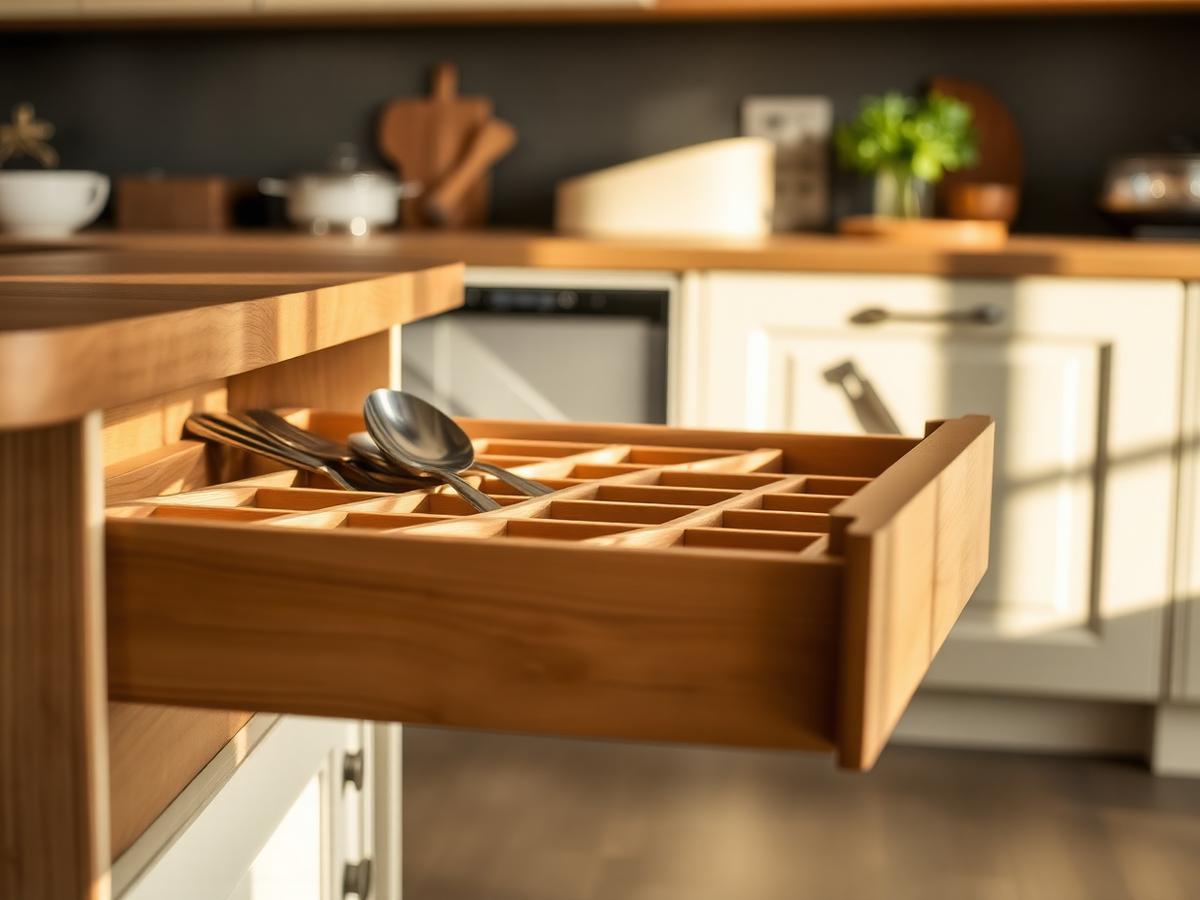
| Drawer box | Solid, well-jointed drawer boxes with full-extension runners carry weight and let you reach the back. |
| Runners and hinges | Soft-close and full-extension hardware is the part you touch thousands of times. Adjustability matters when walls are not square. |
| Shelf support | Thicker shelves and closer pin spacing prevent the slow bow that appears under dishes. |
| Edge sealing | Exposed edges near sinks and dishwashers are the most common failure point in humid kitchens. |
| Toe kick and levelling | Cabinets sit level even when floors are not; the levelling method decides how doors line up across a run. |
Finish directions for discussion
Natural oak
Warm, visible grain; hides light wear well.
Cream painted
Soft and bright; shows edge wear over time.
Graphite
Strong contrast for lower runs; shows dust.
Sage
Muted colour that sits calmly with wood tones.
Walnut tone
Deeper wood register for islands and accents.
Warm white
Neutral base that lets counters lead.
Clay
Earthy mid-tone; forgiving in bright daylight.
Ink blue
Cooler accent option for a single run.
Swatches are abstract colour chips for discussion only. Real finishes should be judged from physical samples in your own kitchen light.
Interior planning
Assign storage to zones, not to leftovers
Instead of filling cabinets after installation, decide in advance what each opening holds. It changes the drawer heights you order.
Zone
Beside the sink
Waste separation, cleaning supplies behind a childproofed door if needed, and the dish towels you reach for wet-handed. Keep the cabinet under the sink for plumbing tolerance rather than dense storage.
Zone
Beside the range
Cooking oils, utensils, pans in a deep drawer, and heat-tolerant surface on both sides. Anything you reach for mid-cook should be within one step and no bending if avoidable.
Zone
Prep run
Knives, boards, mixing bowls, and measuring tools in the drawer nearest your standing position — usually between sink and range.
Zone
Tall storage
Pantry goods with adjustable shelf spacing, plus a place for trays, boards, and baking sheets stored on edge in vertical dividers.
Zone
Small appliance home
A dedicated pocket or garage with an outlet inside, so the counter does not become permanent storage.
Zone
Rarely used
Above-fridge and top shelf space for seasonal items — accepted as hard to reach rather than pretended to be daily storage.
Questions before choosing cabinetry
- What do you own that currently has no proper home?
- Do you prefer to see contents at a glance or keep everything behind doors?
- How heavy are your everyday pots, and will drawers carry that weight?
- Is anyone in the household reaching from a seated position or with limited grip?
- Do you want any open shelving, and are you willing to dust it?
- Will appliance panels be integrated, and does that change door sizing?
A note on expectations
Questions
Cabinets and storage FAQ
— Drawers or doors in base cabinets?
Deep drawers put the contents in front of you instead of requiring you to reach into a dark box, which is why many people prefer them for pots, pantry goods, and plates. Doors with interior shelving still make sense for tall items, waste pull-outs, and under-sink space where plumbing occupies the cabinet.
— What is the difference between framed and frameless boxes?
A framed box has a face frame at the front edge, which adds rigidity and a traditional look but slightly narrows the opening. A frameless box gives a wider clear opening and a flatter, more contemporary face. Both can be built well or poorly; the joinery, hardware, and material matter more than the category.
— Is refacing worth considering?
Refacing replaces doors, drawer fronts, and visible surfaces while keeping the boxes. It can be reasonable when boxes are square, solid, and correctly positioned for how you use the room. It is not a good fit when boxes are water damaged, sagging, or in the wrong place, because the underlying problem stays.
— How should corner cabinets be handled?
Corners are where storage is most often lost. Options include a diagonal corner unit, a pull-out mechanism, a blind corner with an articulating shelf, or simply accepting a dead corner and giving that wall to something else. Each has trade-offs in cost, reach, and door clearance that are easier to weigh in the drawing stage.
— Does cabinet material matter in a humid climate?
It can. Kitchens in coastal and humid environments see moisture swings, so how a panel is sealed on all edges — particularly around the sink base and dishwasher — tends to matter as much as the panel type itself. This is a discussion to have about your specific room rather than a rule that applies everywhere.
Planning a kitchen project?
Write down your room measurements, what frustrates you about the current layout, and which parts you would keep. Contact details will be added before publication; until then the assistant answers informational questions.